


DevOps Transformation and Resilient AWS Infrastructure for 3Line
Multi-AZ ECS, database resilience, storage, and operational recovery.
See 3Line’s Card Management System

Overview
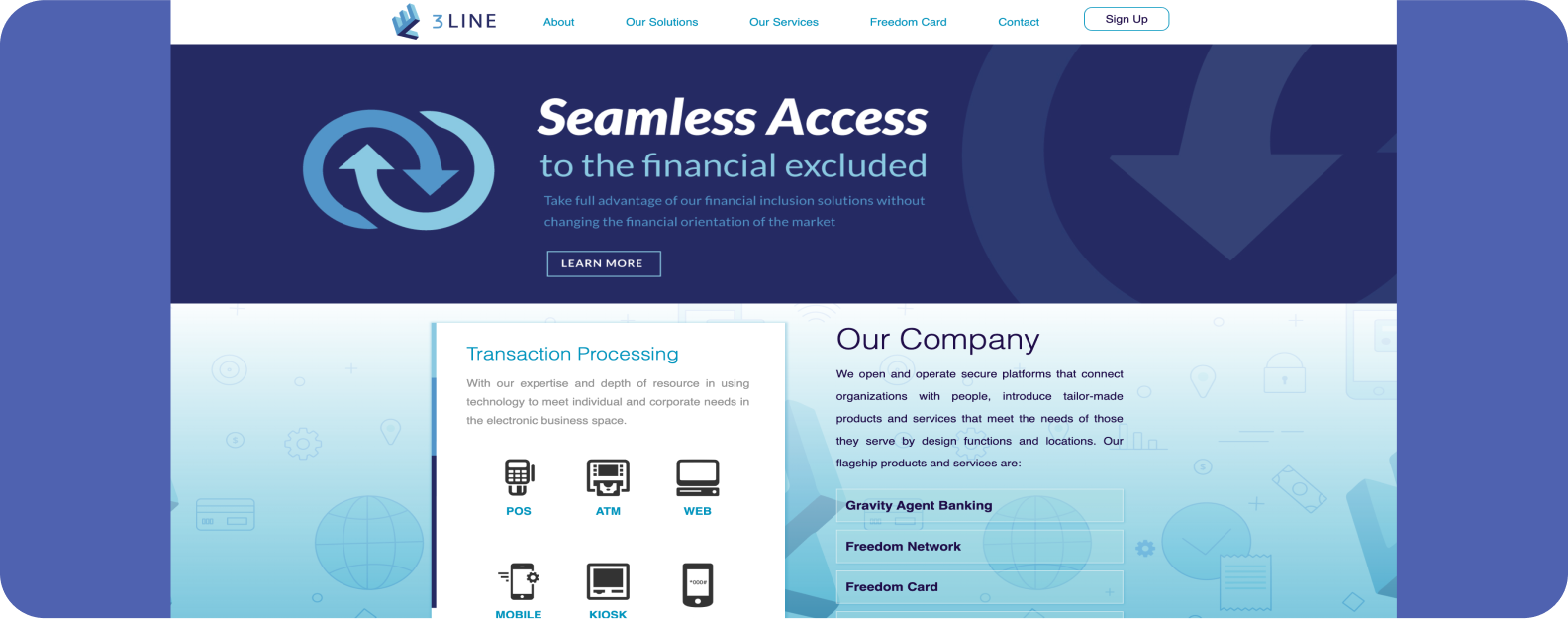
Cognetiks Consulting partnered with 3Line to modernize its AWS infrastructure and establish a secure, automated, and resilient platform for electronic business services. 3Line provides tailored technology solutions in the electronic business and financial-services space, including platforms such as Gravity Agent Banking and Talo Social Banking.
The engagement combined containerized application delivery, multi-Availability Zone deployment, resilient database storage, persistent object storage, versioned deployment artifacts, infrastructure as code, and operational monitoring. The resulting platform improved availability, recovery speed, deployment reliability, and control across Development, QA, and Production environments.
Client Background
3Line required a robust infrastructure foundation for secure and seamless software delivery. Its environment needed to support active application workloads, transactional data, operational assets, and continuous release activity while maintaining strict access control and recoverability during infrastructure or deployment incidents.
Challenges
- Oversized and underutilized EC2 workloads limited resource efficiency and workload scaling.
- Manual infrastructure configuration increased the risk of drift between Development, QA, and Production.
- Deployment failures and configuration changes required reliable rollback and rapid recovery.
- Transactional database data, persistent application assets, EC2 host storage, cached state, and deployment artifacts required different storage and resilience treatments.
- Customer-facing services needed to remain available during releases, infrastructure maintenance, and recovery operations.
Multi-AZ Application Architecture
The production platform used Amazon ECS services running on EC2-backed container hosts in private subnets across two Availability Zones. This retained the host-level control required by 3Line's existing workloads while adding ECS scheduling, service health management, controlled rolling deployments, and automated task replacement. An Application Load Balancer distributed traffic across healthy services, while public subnets hosted controlled ingress and NAT connectivity. AWS WAF and security groups reduced exposure at the application boundary, and the private-subnet design kept application services and database resources away from direct public access.
Resilient Data and Storage Architecture
Amazon RDS hosted the primary transactional database in a private subnet, with cross-Region read replication providing an additional recovery path for regional incidents. RDS database storage was encrypted and supported automated failover, snapshots, and backup recovery. Amazon S3 provided persistent object storage for application assets and operational data independently of the ECS compute layer, while Amazon ECR stored versioned container images used for deployment and rollback.
The ECS cluster used EC2-backed container hosts in the private subnets. Amazon EBS gp3 volumes provided operating-system, Docker/container-runtime, and host-level operational storage. The volumes were provisioned through Terraform and protected with scheduled snapshots and defined retention through AWS Backup, providing a recovery path for the supporting compute layer without treating host storage as the system of record for application data.
Amazon ElastiCache for Redis served as a performance cache layer between ECS services and the database. Redis accelerated repeated reads and transient application state, while Amazon RDS and Amazon S3 remained the durable systems of record.
Infrastructure as Code and Delivery Automation
Terraform defined the infrastructure configuration and enabled repeatable provisioning across segregated AWS environments. GitHub Actions built, tested, and deployed application changes, while Amazon ECR retained versioned images that could be promoted or rolled back through the release process. Amazon ECS used native rolling deployments with health checks and rollback protection, supporting low-disruption releases and rapid restoration of a stable version.
Operational Management and Security
Amazon CloudWatch Logs and dashboards provided real-time visibility into application and infrastructure health, including latency, memory consumption, and container behavior. AWS Systems Manager supported patching, troubleshooting, runbooks, and controlled access to managed EC2 instances where applicable.
IAM roles were scoped by service and environment, and GitHub Actions used federated access rather than long-lived credentials. AWS WAF, Security Hub, GuardDuty, and IAM Access Analyzer strengthened the security and governance posture.
Storage and Recovery Flow
Transactional application data
- Amazon RDS
- Multi-AZ resilience, cross-Region read replica, snapshots, automated failover, and backup recovery
Application assets and operational objects
- Amazon S3
- Persistent object storage independent of ECS compute, with encryption and controlled access
ECS host and container-runtime storage
- Amazon EBS gp3
- Scheduled snapshots, retention, and restore through AWS Backup
Container images and deployment artifacts
- Amazon ECR
- Versioned image storage supporting ECS redeployment and rollback
Frequently accessed or transient state
- Amazon ElastiCache for Redis
- Performance cache and transient state; not the system of record
Disaster Recovery and Operational Continuity
The architecture supported recovery from service failures, configuration drift, infrastructure compromise, and Availability Zone disruption. ECS tasks were distributed across multiple Availability Zones and replaced when unhealthy. Stable container images were retrieved from Amazon ECR, EBS-backed ECS hosts were restored from protected snapshots when required, infrastructure was recreated through Terraform, and RDS replication and recovery controls protected transactional data. Amazon S3 retained persistent application and operational objects independently of the compute layer.
CloudWatch alarms, CloudTrail audit logging, and Systems Manager runbooks supported detection, diagnosis, and response. The recovery process enabled compromised environments to be rebuilt in under 15 minutes while maintaining controlled delivery across Development, QA, and Production.
Outcomes
- Rebuilt compromised environments in under 15 minutes.
- Improved deployment success rate to 99%.
- Improved availability through ECS deployment across multiple Availability Zones and load-balanced traffic distribution.
- Strengthened transactional-data resilience through RDS replication, failover, snapshots, and backup recovery.
- Separated durable object storage, database storage, EC2 host block storage, deployment artifacts, and transient cache state according to workload requirements.
- Improved recovery of supporting compute hosts through EBS snapshots, retention policies, and AWS Backup.
Cognetiks transformed 3Line’s AWS platform into a secure, automated, and resilient multi-AZ architecture with purpose-built data, object, block, artifact, and cache storage layers.
Our clients have good things to say about us
Hear from 3Line


Cognetiks Consulting spearheaded a total DevOps transformation for 3Line, migrating us to a high-performance containerized architecture. Their expertise in Infrastructure as Code and CI/CD automation has reduced our deployment errors and revolutionized our recovery times. They are more than consultants; they are architects of operational excellence.

- 3Line

Back to top
Created to accelerate business operations by helping them adopt DevOps best practices and implement technologies to assist this.
GET INFORMATION

UK Address
Studio 2.24, Plaza 535 King's Road SW10 0SZ
Nigerian Address
29 Marina Rd, Lagos Island, Lagos 102273, Lagos, Nigeria



Registered in England and Wales. - Company No. 12326521. - VAT No. GB342421730.